
Ernst Caramelle. Figures of Thought
Generali Foundation Study Center, Altstadt (Rupertinum)
Curator: Jürgen Tabor
Reading and Media Lounge: Stefanie Grünangerl
Generali Foundation Study Center, Altstadt (Rupertinum)
Curator: Jürgen Tabor
Reading and Media Lounge: Stefanie Grünangerl
Ernst Caramelle is one of the most prominent international exponents of Austrian conceptual art. Since the 1970s, he has probed the unstable relationship between reality and illusion, between the picture and the three-dimensional world. Combining analytical precision with subtle humor, his work inquires into how we define art, where it happens, and how we perceive it.
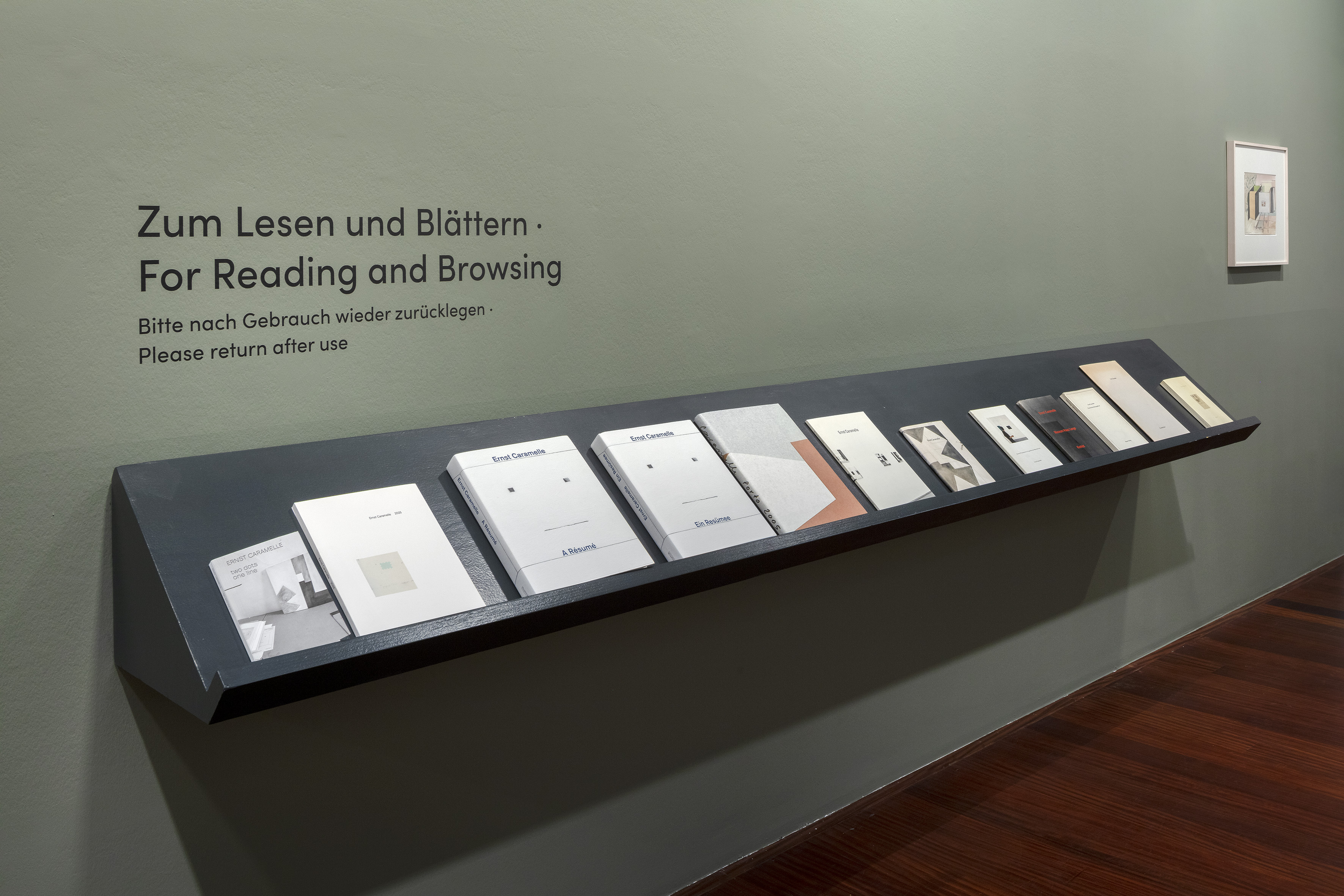
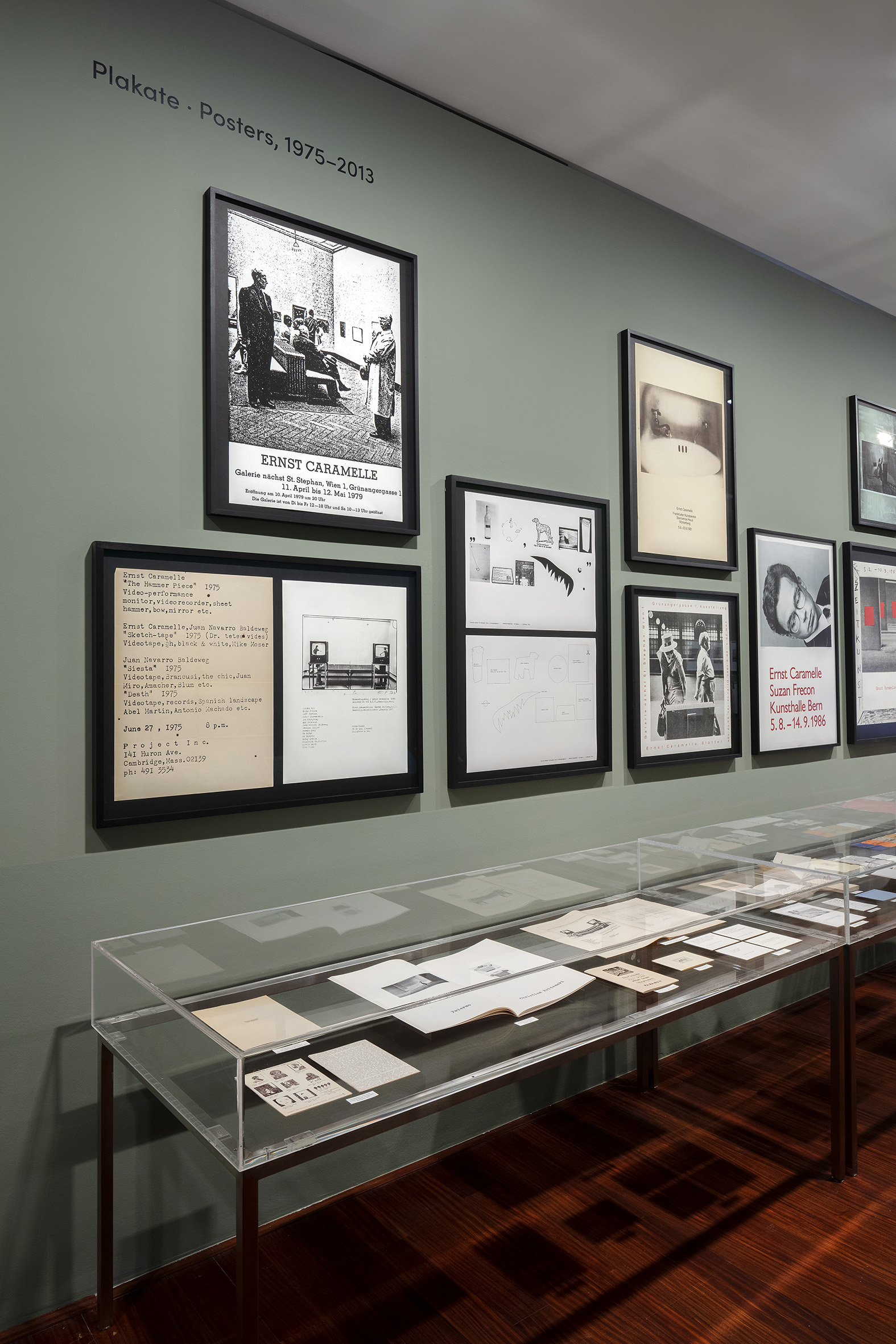
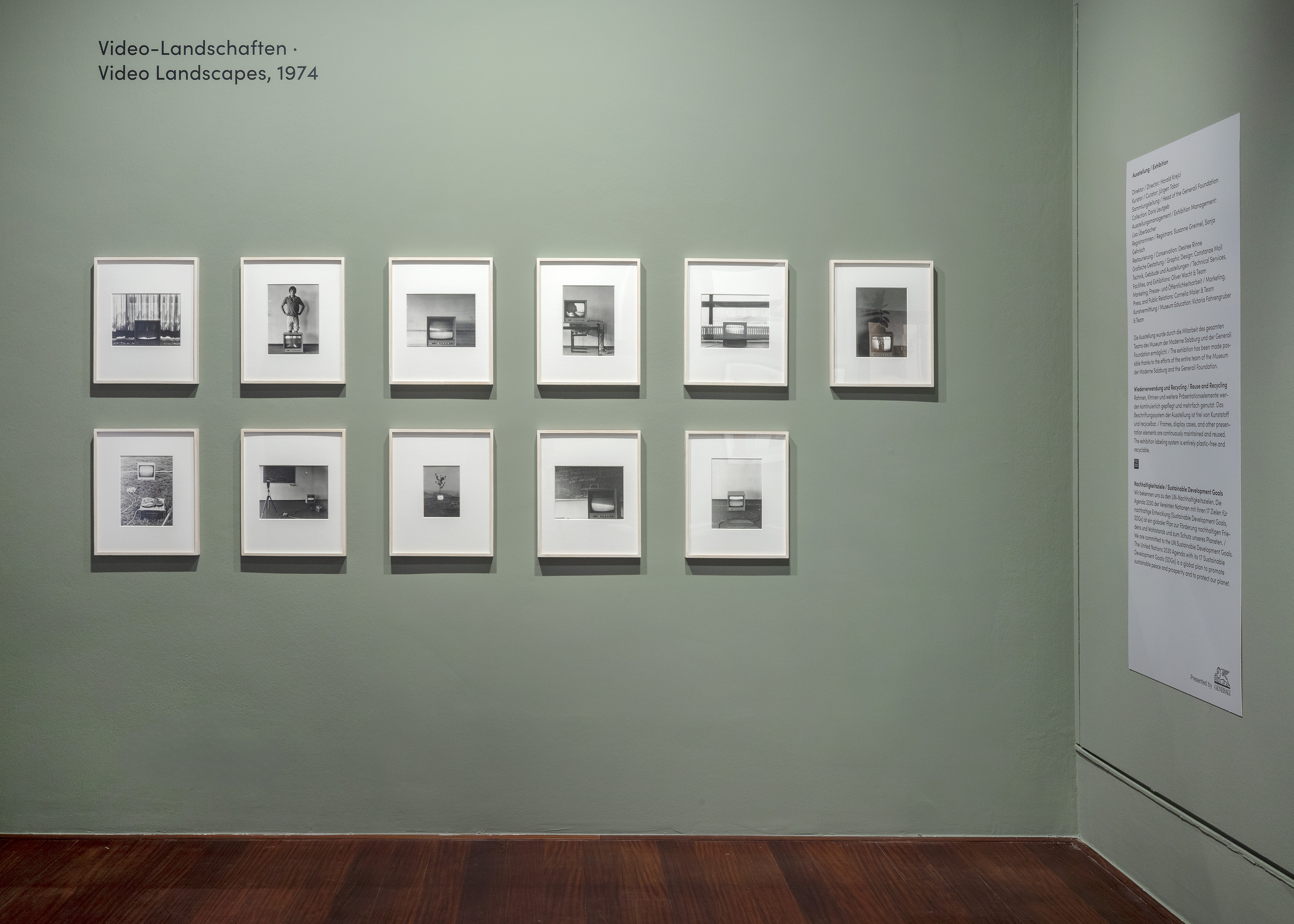
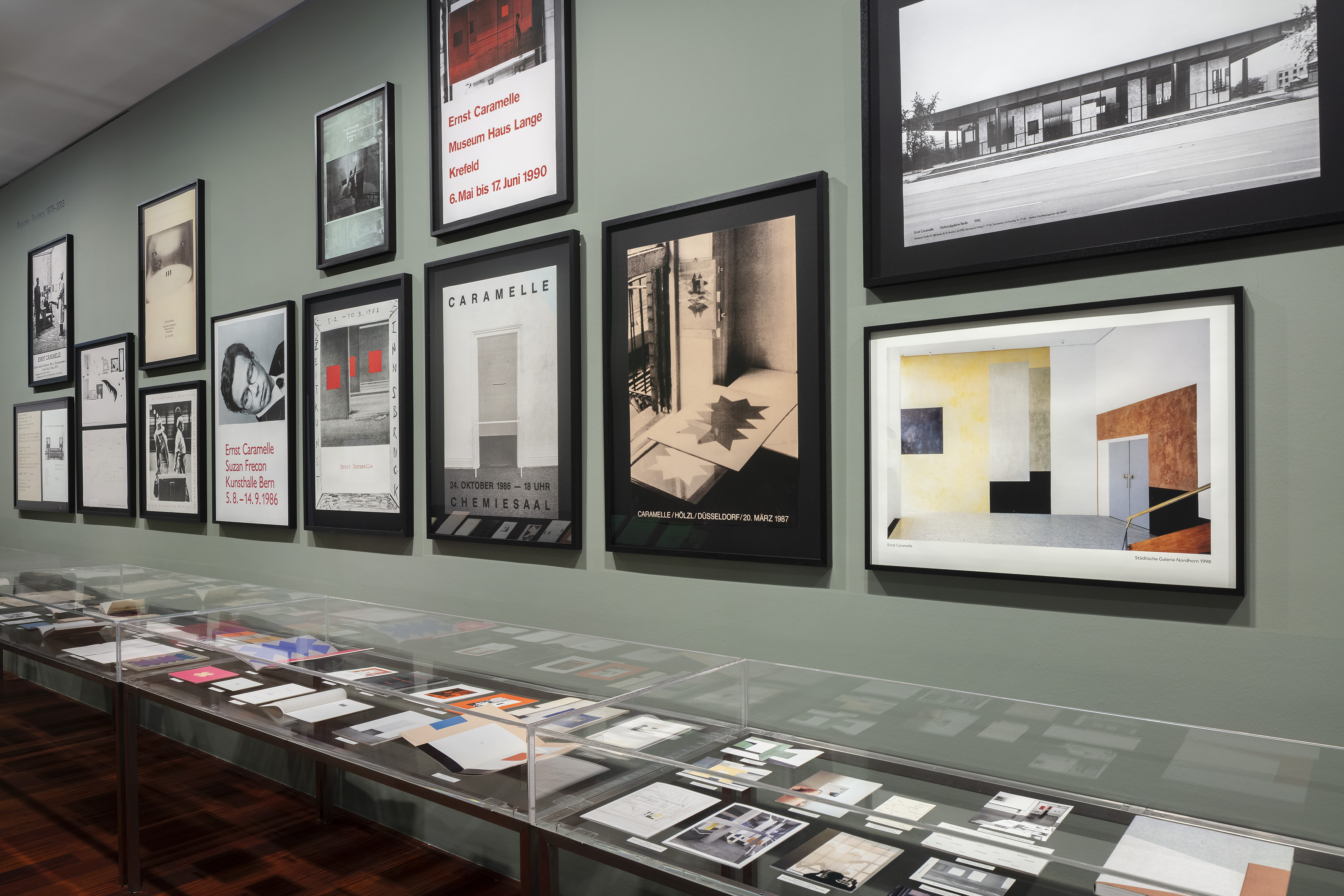
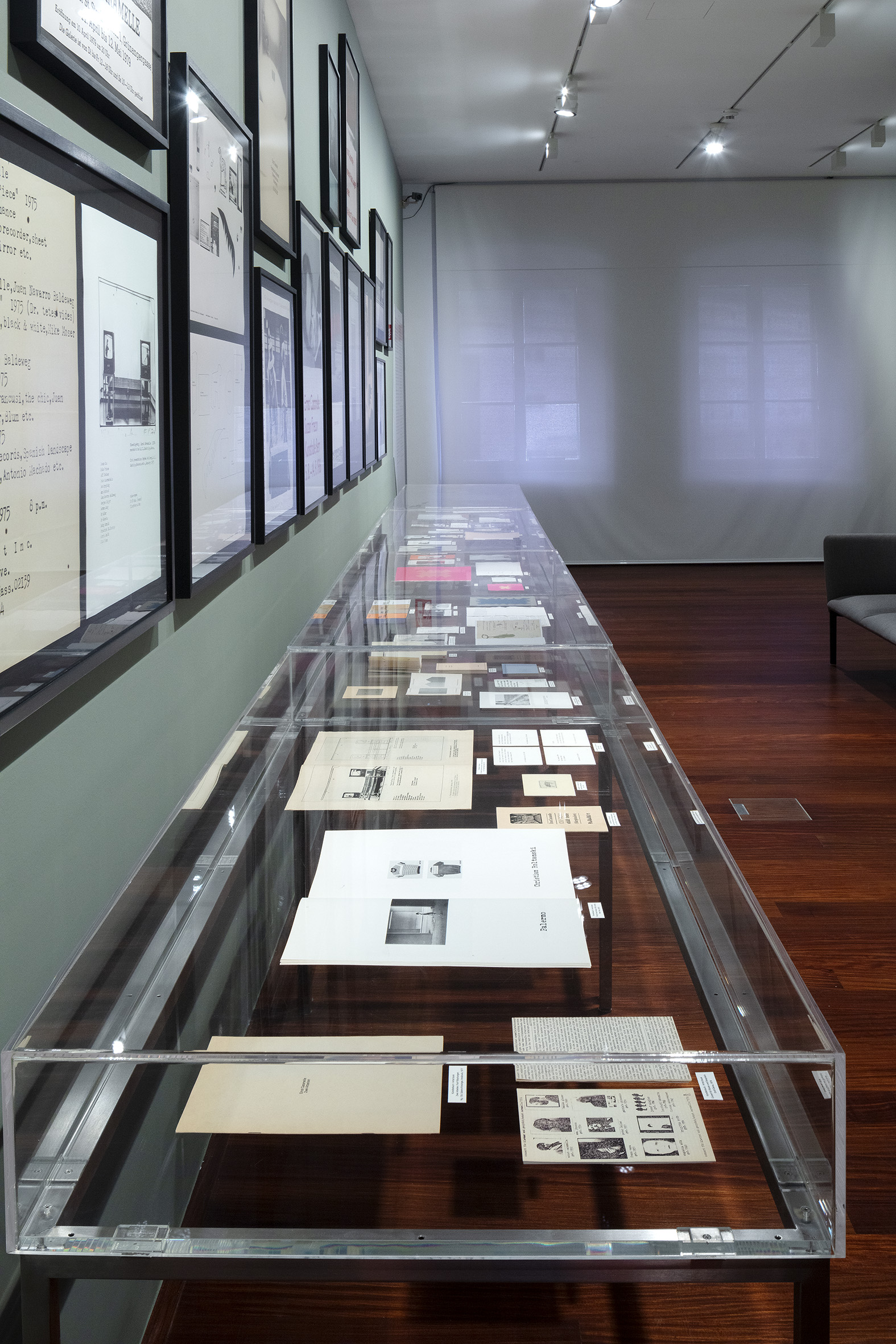
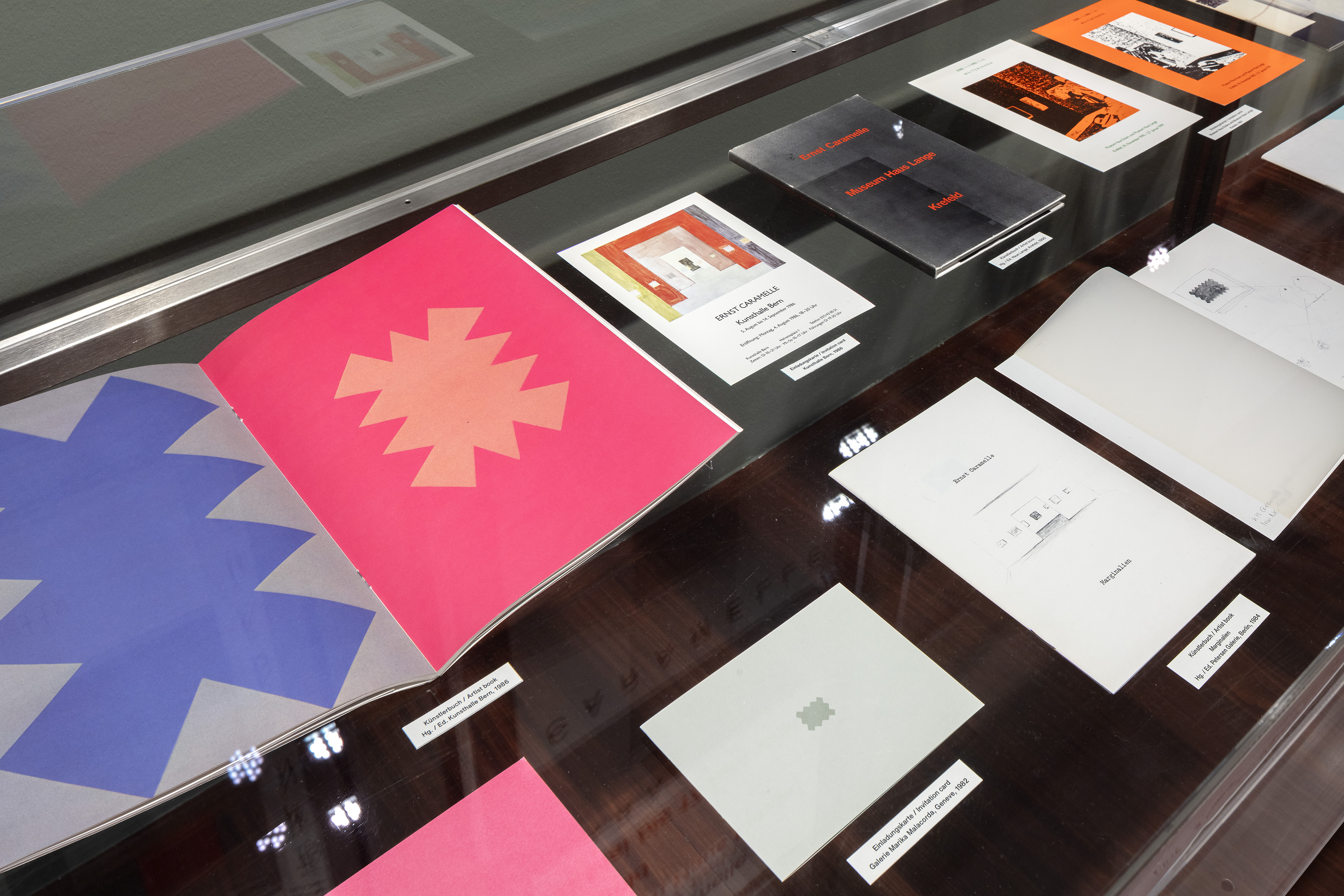
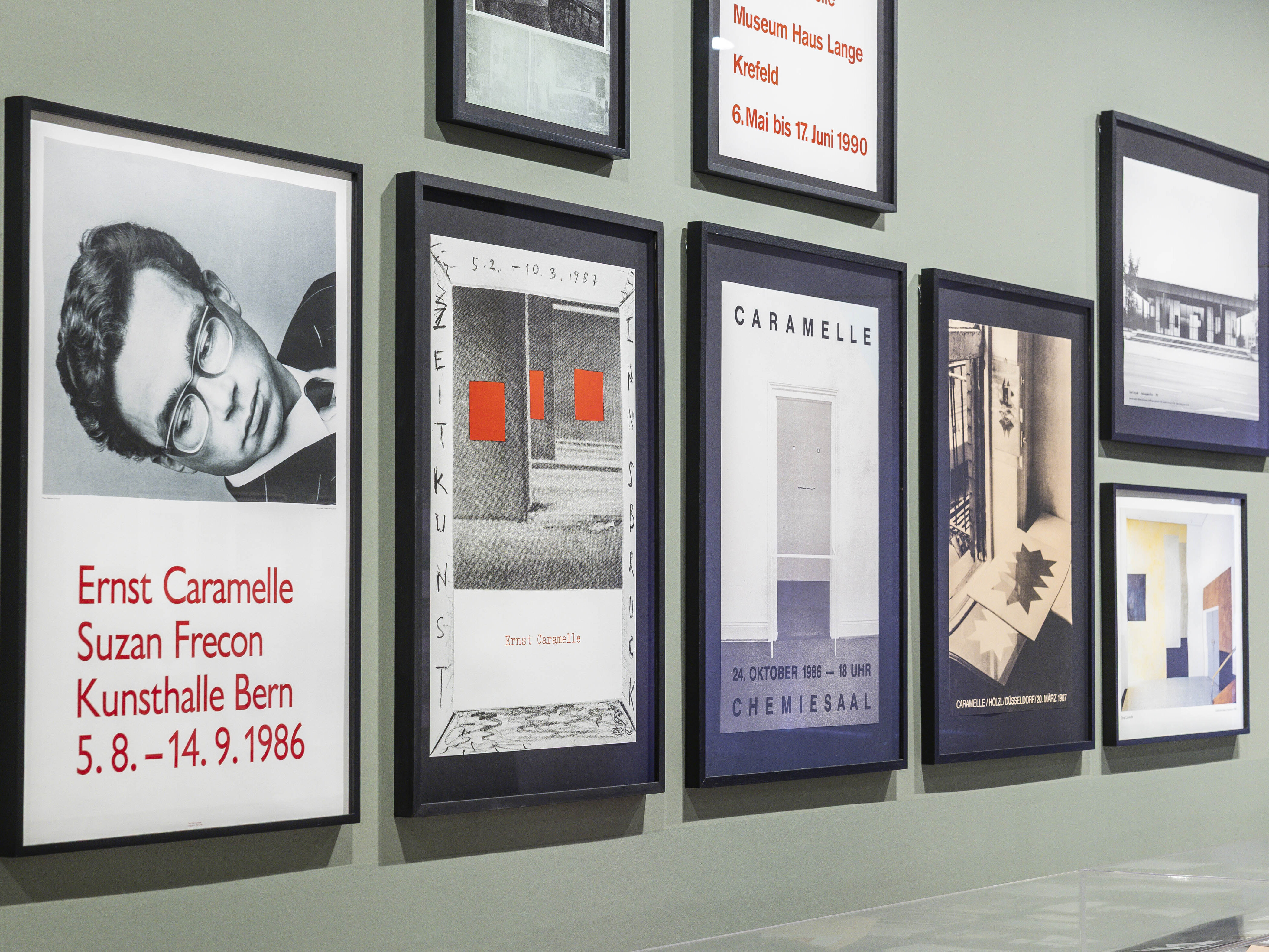
The exhibition turns the spotlight on two central bodies of work in Caramelle’s (b. 1952) oeuvre: his decades-long preoccupation with artist’s books, posters, and invitation cards (1974–2025) and his early photographic series Video Landscapes (1974).
Printed matter
Like few other artists, Caramelle has conceived of ostensibly incidental print media as standalone and full-fledged artistic spaces that he has harnessed to engage his audience. Many of his early drawings already feature combinations of writing, drawings, and photographic images that visualize movements of thought. Over the decades, Caramelle has developed this register into a distinctive vocabulary of recurring forms and methods—the titular “figures of thought.”
Illusion or reality?
His photographic series Video Landscapes serves in the presentation as a conceptual counterpoint to his printed matter. It documents a number of experiments involving video, then still a young medium, for which he arranged television screens in varying constellations involving the body and the spatial situation. Each screen shows the exact image that it obscures in the real-world scene and so might be mistaken for a windowpane—an uncanny illusion that blurs the divisions between reality and medium, perception and deception. In this way, Caramelle raises central questions that have propelled his art to this day:
What do we see? Where do reality and illusion, picture and space begin and end? What role can art play today, and how does it draw its audience and its surroundings into interaction?
Reading, browsing, seeing
Books, posters, and maps are not just on view in the exhibition but made available for hands-on study in sample copies. Visitors are encouraged to browse and compare selected publications in order to gain an understanding of their internal construction, sequencing, and use of visual and textual content.